


HVAC Air Filters and Indoor Air Quality Services
HVAC air filters trap dust, pet dander, mold spores, pollen, and volatile organic compounds before they circulate through your home. Clean filters protect both your system and the air your family breathes.
At Air & Water Solutions, serving Mid-Missouri since 1996, we know neglected filters can drive up energy bills and worsen indoor air quality.
Key Takeaways
• HVAC air filters remove particulate matter - including pet dander, dust, pollen, and smoke - from indoor air before it recirculates through your living spaces. Choosing the right filter grade can make a real difference in what circulates through your home every day.
• Air & Water Solutions has been serving Mid-Missouri since 1996 with hands-on HVAC experience. Our team walks through the options with you and tailors a recommendation to your home.
• Poor indoor air quality can aggravate allergy and asthma symptoms in some people. Consistent filter maintenance is a simple and affordable step any homeowner can take to help keep airborne particles in check.
• Clean filters maintain proper HVAC system function, protect interior components from debris buildup, and extend the overall lifespan of your equipment. A well-maintained system also runs more efficiently, which keeps your home comfortable without unnecessary strain on the unit.
What Is an HVAC Air Filter and Why Does It Matter?
An air filter is a critical component of your home's heating and cooling system, designed to remove particulate matter from circulating air before it reaches your living spaces.
Without a properly functioning filter, dust, hair, and debris accumulate on interior system components, reducing efficiency and shortening equipment life. Filter quality determines how much protection your home actually receives. A basic filter catches larger particles like dust and pet hair, while a higher-quality filter goes further - capturing more of the finer allergens and pollutants - which can mean cleaner air with every cycle.
What Does an HVAC Air Filter Actually Protect?
An air filter serves two distinct purposes at once. First, it protects the mechanical components inside your HVAC system from debris buildup that causes wear. Second, and equally important, the filter safeguards the indoor air quality of every room in your home by trapping contaminants before they recirculate.
Does Filter Quality Really Make a Difference?
Filter quality can make a real difference in what gets removed from your air. Lower-grade filters handle coarse particles, while higher-grade options intercept finer allergens, airborne pollutants, and biological contaminants. The gap between a basic filter and a premium one is not minor - it affects how many fine particles stay in the air your family breathes day after day.
Here is a quick breakdown of what filter quality affects:
• Particle capture: Coarse debris vs. fine allergens are separated by filter grade. Higher-rated filters can catch smaller particles that basic filters let through.
• System protection: Reduced buildup on coils and blower components extends the service life of your equipment. A cleaner system also runs more efficiently and requires fewer unexpected repairs.
• Air quality outcomes: Fewer circulating irritants can mean a more comfortable home for people with allergies. Keeping filters on schedule helps maintain that over time.
At Air & Water Solutions, our HVAC maintenance visits in Columbia, MO are a good time to ask which filter suits your home and system. Protecting your air starts with getting the filter right.
What Pollutants Are Hiding in Your Indoor Air?
Indoor air harbors a complex mix of pollutants that most homeowners never see - seasonal pollen, dust mites, pet dander, mold spores, and volatile organic compounds (VOCs) from everyday household products all accumulate inside your home and can affect comfort.
Poor indoor air quality is a more common concern than most people expect.
Common indoor contaminants include:
• Pet dander - microscopic skin flakes shed by cats, dogs, and other animals that become airborne and recirculate continuously. They are a common allergen in homes with pets.
• Dust and dust mites - present in virtually every home and concentrated in carpets, bedding, and upholstered furniture. Regular filtration can help reduce the amount that stays in the air.
• Pollen - infiltrates through open windows and doors during high-season months and lingers inside long after the source is gone. Good filtration can help reduce how much pollen recirculates indoors.
• Mold spores - thrive in humid areas like basements and bathrooms, then travel through the air to other parts of the home. Left unaddressed, mold spores can aggravate allergy symptoms in some people.
• VOCs - emitted by cleaning products, paints, and building materials at levels that are often hard to notice. Proper filtration and ventilation together help keep VOC concentrations in check.
• Smoke - from cooking, candles, or outdoor air infiltration contains fine particulate matter. Smoke particles are small and can be hard to capture without a quality filter in place.
These contaminants don't just sit still - your HVAC system continuously circulates air throughout your home, spreading particles from room to room with every cycle.
How Is Indoor Particulate Matter Measured?
Particulate matter is classified by size in microns, and the two most common measurements are PM2.5 and PM10 - the numbers refer to particle diameter in microns. Smaller particles like PM2.5 can travel deeper into the lungs, which is why they are often a focus of air quality guidance.
Who May Notice Poor Indoor Air Quality Most?
People with allergies or asthma may notice changes in indoor air quality more than others. For any household, consistent HVAC maintenance, including regular air filter changes, can help reduce airborne particles and keep your home's air cleaner year-round.
How Do Clogged Filters Damage Your HVAC System?
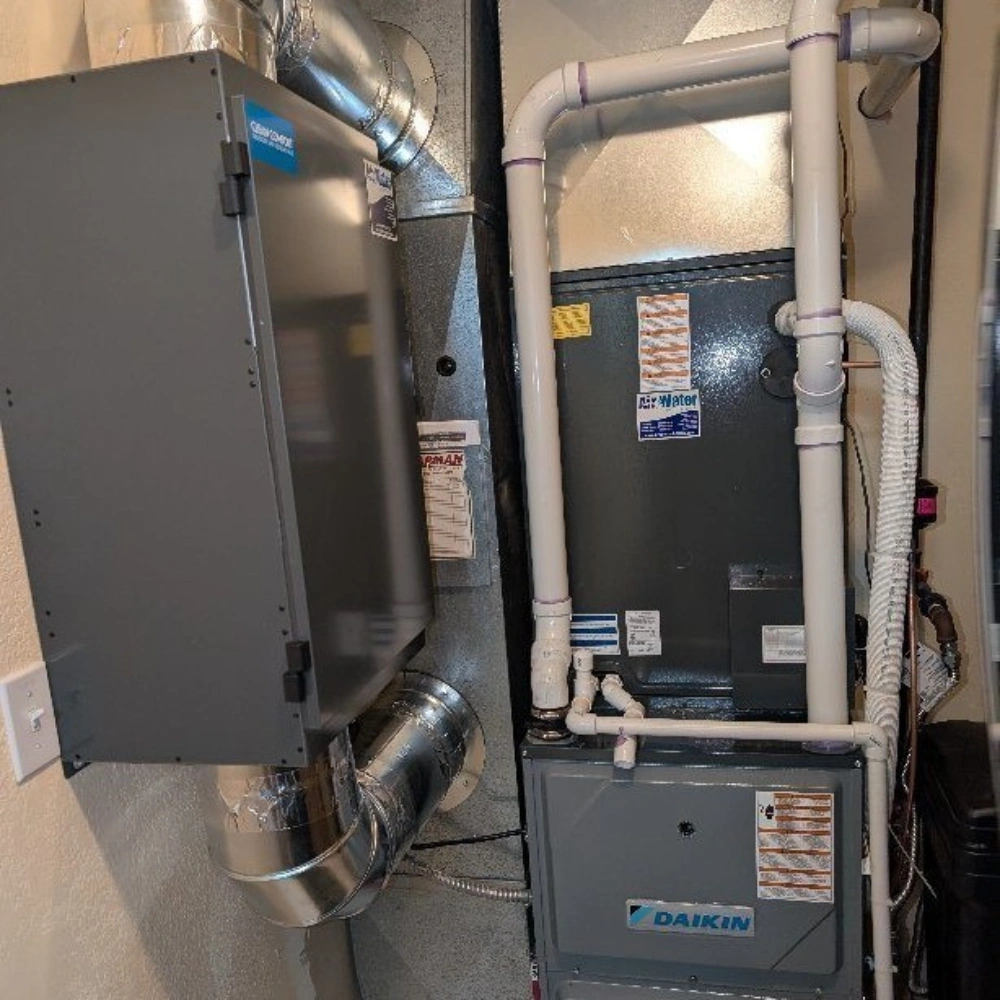
A clogged air filter forces an HVAC system to work significantly harder than it was designed to, reducing efficiency and raising the risk of unexpected breakdowns.
Buildup on interior components - caused directly by a dirty filter - compounds that strain and drags down performance over time. When airflow is restricted, the system strains to pull air through a blocked filter, putting stress on motors, fans, and coils. Small inefficiencies compound fast, and what starts as a minor restriction becomes a serious mechanical burden.
Here's what a neglected filter sets in motion:
• Reduced airflow forces the blower motor to run longer cycles just to reach the target temperature. Over time, this extended runtime accelerates wear on the motor and shortens its useful life.
• Component buildup from unfiltered particles settles on coils and internal surfaces, decreasing the system's ability to transfer heat effectively. The result is a unit that works harder and delivers less comfort.
• Increased wear on moving parts shortens the overall lifespan of the equipment. Repairs become more frequent and the window before full replacement narrows considerably.
• Higher energy draw as the system compensates for restricted airflow means your home uses more energy to maintain the same temperature. That inefficiency adds up consistently over a season.
Why Does Buildup on Interior Components Matter?
When a filter fails to capture particles, dust and debris migrate deeper into the system and coat coils and other surfaces, reducing the system's ability to transfer heat effectively. The result is a unit that runs longer, works harder, and delivers less comfort - all from a problem that routine filter care would have prevented.
How Does Regular HVAC Maintenance Prevent These Problems?
Consistent HVAC maintenance is the most reliable way to stop filter-related damage before it starts. At Air & Water Solutions, our indoor air quality services and HVAC maintenance agreements are designed to help keep systems running efficiently. Agreement visits are annual or twice a year and include priority service, so small issues can be caught before they become costly repairs, and our repair services are available when a system has already been pushed past its limits.
What Health Risks Come From Poor Indoor Air Quality?
Poor indoor air quality exposes everyone in a home to a complex mix of pollutants, allergens, and irritants that are often invisible to the naked eye.
People with allergies or asthma may notice it most, but poor indoor air can affect anyone who spends time in the home. The pollutants circulating inside a home - including pet dander, dust mites, pollen, mold spores, and volatile organic compounds (VOCs) released by everyday household products - don't announce themselves. They accumulate quietly and can build up over time.
Who May Notice Poor Indoor Air Quality Most?
Allergy sufferers may notice their symptoms more when air filter performance drops and pollutant levels rise indoors. People with hay fever may be bothered by airborne pollen and mold spores, both of which circulate more freely when filtration is inadequate. For people with asthma, poor air quality can aggravate symptoms and make breathing less comfortable. Healthy individuals can notice it too, since poor air quality can affect anyone who spends regular time in the space.
Can HVAC Maintenance Actually Reduce Airborne Contaminants?
Consistent HVAC maintenance - including regular air filter changes - can help reduce the concentration of airborne contaminants in your home. A well-maintained system captures particles before they recirculate through living spaces, helping lower the overall pollutant load that occupants breathe every day.
Key pollutants a properly maintained HVAC system helps control:
• Pet dander and dust mites are common triggers for indoor allergy symptoms. Keeping filters clean and on schedule can help reduce the amount that stays in household air.
• Seasonal pollen and mold spores enter the home through doors, windows, and the HVAC system itself. A well-maintained filter intercepts them before they reach living spaces and recirculate through every room.
• Volatile organic compounds (VOCs) off-gas continuously from building materials and household products. Proper filtration and ventilation paired with routine HVAC maintenance can help keep VOC levels in check.
• Fine particulate matter (PM2.5 and PM10) can be small enough to travel deep into the lungs. Higher-grade filters are designed to capture more particles in these size ranges.
At Air & Water Solutions, we help Columbia, MO homeowners stay on top of their indoor air with indoor air quality services tailored to the home.
Does Filter Quality Really Make a Difference?
Filter quality directly determines which contaminants an air filter captures and which ones pass straight through into your living space. Higher-quality filters capture more fine allergens and pollutants, while lower-quality options catch only the largest particles.
Most homeowners assume any filter does the same job, but that assumption is costly. A filter that misses fine particulate matter, pet dander, and mold spores allows those contaminants to recirculate through your home continuously - straining your system and degrading the air your family breathes every day.
What Types of Contaminants Does Filter Quality Affect?
Filter quality determines the range of particles a filter can trap. Basic filters handle large dust and debris, while higher-grade filters go further - capturing microscopic allergens, airborne pollutants, and biological contaminants like mold spores. For households with allergy sufferers, pets, or anyone with respiratory sensitivities, that difference can be noticeable in daily comfort.
Here's a quick breakdown of what filter quality affects:
• Allergens - pollen, pet dander, and dust mite debris are common triggers for indoor allergy symptoms. A higher-grade filter captures these particles before they have a chance to recirculate through the home.
• Pollutants - smoke particles and volatile organic compounds are present in most homes at varying levels. Proper filtration intercepts them at the source rather than allowing them to build up in the air you breathe.
• Biological contaminants - mold spores and bacteria are small, and a higher-rated filter is better able to capture them. Households with sensitive members may want to ask about higher-grade filter options.
• System debris - dust and hair that accumulate inside equipment reduce efficiency and cause premature wear. A quality filter keeps these particles out of the system's mechanical components entirely.
How Does Filter Quality Connect to Overall HVAC Maintenance?
Your HVAC system plays a central role in maintaining a safe, comfortable indoor environment, but only when every component - including the filter - is doing its job. Neglecting filter quality undermines the entire system, forcing equipment to work harder, shortening its service life, and reducing efficiency over time. As a Daikin Comfort Pro, Air & Water Solutions helps Columbia, MO residents select the right filter for their specific system and indoor air quality goals - so every component works together the way it was designed to.
What Are the Biggest HVAC Air Filter Myths?
Misinformation about air filters costs homeowners real comfort and real money.
The most damaging myths are the ones that sound reasonable, because those are the ones that go unchallenged the longest - quietly degrading your system and your indoor air quality season after season.
Does Your Home Only Have One Air Filter?
Many homeowners assume one filter covers the whole house, but that assumption is wrong. A home can have a filter next to the furnace or air handler and a separate filter at a central return air vent in a wall or ceiling, and both locations serve distinct functions within the system. Maintaining only one filter while ignoring the other is like changing the oil in one engine and leaving the second untouched. If a home has filters in both locations, both require regular attention - neglecting either one compromises the entire system's performance.
Do You Really Need to Maintain Both Filter Locations?
Skipping HVAC maintenance on even a single filter creates a weak point that forces the system to work harder and shortens its lifespan. The consequences compound gradually, which is exactly why this myth is so easy to overlook until the damage is already done.
Here are some of the most persistent air filter myths - and the facts that replace them:
• "I only have one filter to worry about." False - filters can exist at the air handler and at return air vents throughout the home. Missing even one filter location allows unfiltered air to circulate freely through the system and into your living spaces.
• "Changing filters rarely is fine." False - regularly changing or cleaning filters is one of the most direct steps a homeowner takes to improve indoor air quality. An overdue filter stops capturing contaminants and begins restricting airflow, compounding problems on both fronts.
• "Filter maintenance is optional." False - neglecting either filter location undermines the whole system and accelerates wear on every component downstream. What feels like a minor oversight today becomes a repair call tomorrow.
The pattern across every myth is the same: small oversights compound into larger problems. Staying consistent with filter care is straightforward, and the payoff - cleaner air, a more efficient system, fewer unexpected repairs - is well worth the effort.
How Does Air & Water Solutions Improve Your Indoor Air?
Air & Water Solutions offers indoor air quality upgrades as part of its HVAC services. Managing indoor air quality goes beyond temperature - it affects how clean and fresh the air feels for every person under your roof.
We have been serving Mid-Missouri since 1996, and our team walks through the options with you and recommends a solution that fits your home.
What Indoor Air Quality Services Does Air & Water Solutions Offer?
Our home comfort services include dedicated indoor air quality upgrades that work alongside your existing heating and cooling system and can help reduce airborne dust, pollen, and pet dander. Pairing air quality improvements with routine HVAC maintenance keeps both your system and your air performing at their best.
Here is a quick look at how our core services connect to cleaner indoor air:
• IAQ upgrades: Can help reduce airborne particles such as dust, pollen, and pet dander
• HVAC maintenance: Helps prevent dust and debris buildup inside the system
Is Improving Indoor Air Quality Accessible for Most Homeowners?
Upgrading your home's air quality does not have to strain your budget. Financing is available through Aqua Finance for all services, and City of Columbia financing is available for qualifying HVAC customers. Our team walks through the available options with you so you can move forward with confidence - whatever your starting point.
What Steps Should You Take to Protect Your Air?
Protecting indoor air quality starts with one straightforward habit: regularly changing or cleaning your air filter.
Neglecting this single step allows dust, pet dander, pollen, and other contaminants to recirculate through your home unchecked, building up in concentration with every passing week.
Here are the core steps we recommend for every Columbia, MO homeowner:
• Change or clean air filters on schedule. A clogged filter stops doing its job and begins restricting the airflow your system needs to operate efficiently. Staying current with replacements is one of the most direct ways to keep airborne pollutants from building up inside your living spaces.
• Schedule regular system tune-ups. Routine HVAC maintenance catches small problems before they become expensive failures and helps keep your system running efficiently. Consistent tune-ups can also help extend the lifespan of your equipment.
• Act fast when something goes wrong. Delayed repairs allow minor issues to escalate into larger mechanical failures. Our team provides repairs and replacements to restore comfort before a small problem turns into a full system breakdown.
• Enroll in a maintenance plan. Our maintenance agreements include priority service and annual or twice-yearly visits, so your system gets regular attention - not just when something breaks.
How Often Should You Change Your HVAC Air Filter?
Filter change frequency depends on your home's specific conditions, including pets, number of occupants, and local air quality. A general rule is to inspect filters monthly and replace them when they appear visibly dirty or clogged - staying proactive keeps your system working efficiently and your air cleaner year-round.
What Should You Do If Your HVAC System Fails Unexpectedly?
System failures don't follow a convenient schedule, which is why Air & Water Solutions offers emergency service 24/7/365. A live agent answers after hours, and a technician can be dispatched day or night. Reaching out right away limits the time your Columbia, MO home spends without heating or cooling.
Frequently Asked Questions
What does an HVAC air filter actually do?
It traps contaminants like dust, pet dander, pollen, and mold spores before they circulate through your home, protecting both your HVAC system's mechanical components and your family's indoor air quality.
Without a functioning filter, those particles migrate into the system itself and recirculate through every room continuously.
Does filter quality make a real difference for allergens?
Higher-grade filters capture fine allergens, airborne pollutants, and biological contaminants that lower-grade filters miss entirely. That difference can help reduce the irritants that aggravate allergy and asthma symptoms in sensitive family members, making filter grade an important choice for a homeowner.
What pollutants are common in Columbia, MO homes?
Like homes anywhere, Columbia, MO homes can contain pet dander, dust mites, pollen, mold spores, and volatile organic compounds from everyday household products. Air & Water Solutions can help with HVAC filtration options tailored to each home's specific conditions.
Ready to Breathe Cleaner Air in Your Columbia, MO Home?
At Air & Water Solutions, we are committed to helping every Columbia, MO homeowner take control of their indoor air quality - one filter, one system, one household at a time.
Whether you need a free consultation on filtration, a routine tune-up, or a full indoor air quality upgrade, our team is ready to guide you to the right solution. Contact Air & Water Solutions or call (573) 445-1112 for a free quote and take the first step toward cleaner indoor air. Emergency service is available 24/7/365.
Financing Options
We offer flexible financing options through Aqua, Optimus, and Columbia to make your home comfort upgrades more affordable and stress-free.

Financing
Columbia provides competitive financing solutions with low interest rates, helping homeowners upgrade their water systems with confidence and peace of mind.


